Who is Tu Nipi Water Solutions

  • Tu Nipi Water Solutions is an Indigenous-owned partnership, combining Indigenous leadership from Fort McKay Oil Services (FMOS) with advanced technology and science from Biolargo Canada, to work together to solve the generational challenge of addressing the overwhelming amounts of tailings water from the oil sands in Alberta.

Who is BioLargo Canada

  • “Biolargo Canada is an Alberta based cleantech company headquartered at the University of Alberta. They have developed the Advanced Oxidation System (AOS) to treat persistent organic pollutants in wastewater streams including oil sands tailing and pharmaceuticals in municipal wastewater. The AOS specializes in low-energy water treatment with no chemical additives with a track record of successful pilots in both municipal and industrial wastewater.”

The Challenge We Face

  • Up to 1.5 trillion litres of tailings water are currently being stored in Alberta, containing toxic compounds like Naphthenic acids, Polycyclic Aromatic Hydrocarbons (PAHs), BTEX (Benzene, Toluene, Ethylbenzene, Xylene), metals, and other persistent organics.
  • Historically, there have been instances of leaks from tailings ponds as well as downstream communities facing concerns around their water. This has led to further regulatory pressure and looking to improve reclamation timelines.

How the AOS Can Help

  • Deploy the AOS to break down toxic organic contaminants
  • Modular, scalable systems: 100 L/min → 1,200 L/min → multi‑seacan commercial units
  • No chemical additives, low energy, small footprint
  • Supported by ERA Tailings Technology Challenge funding pathway
 

The AOS Technology

What Is the AOS

  • An electrochemical advanced oxidation system
  • Generates hydroxyl radicals, ozone, and peroxide directly from water
  • Breaks down persistent organic contaminants rapidly
  • No chemical precursors required
  • Low energy (3–18 W per unit)
  • Modular and scalable

Performance

  • Synthetic naphthenic acids: 65–90% removal in one pass; 90–99% removal after 1 hour
  • Real OSPW: 90% reduction in fluorescent organics at 4.2 W
  • Municipal wastewater pilot (Quebec): 49% TOC reduction; 80% removal of pharmaceuticals

Advantages

  • Lowest cap‑ex among advanced oxidation options
  • Small footprint and automated operation
  • Ideal for remote or cold‑weather sites

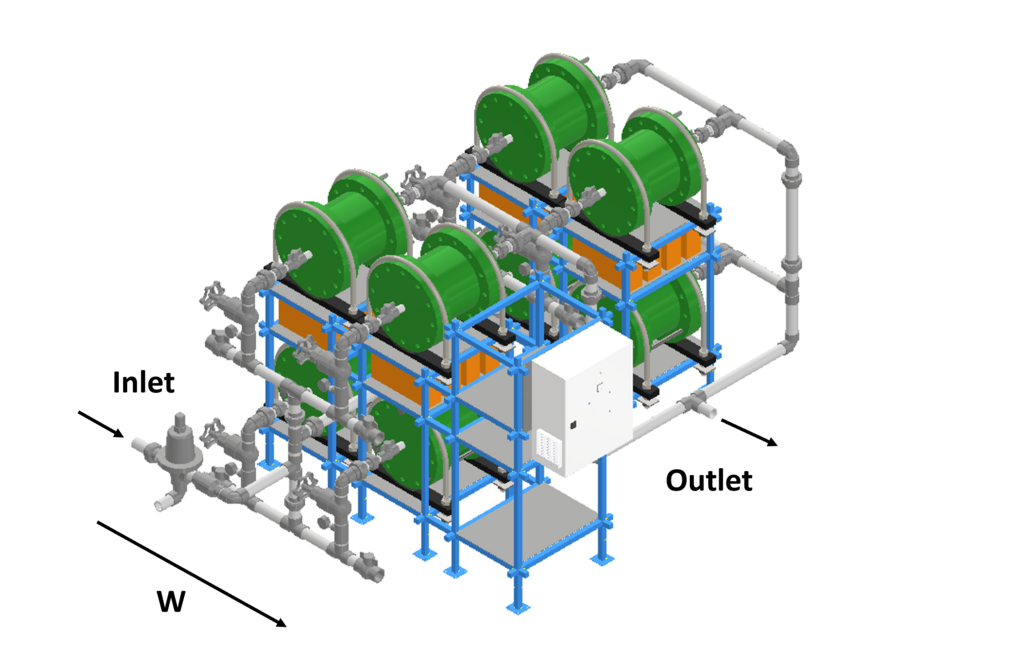
Modular AOS Unit Design - Scalable from 200 L/min to commercial multi-seacan deployments.


Tu Nipi & Fort McKay First Nation

Fort McKay First Nation Context

  • Community located at the confluence of the Athabasca and MacKay Rivers
  • Surrounded by oilsands mines and tailings ponds
  • Decades of documented impacts on air, water, wildlife, and traditional land use
  • Strong history of leadership in environmental protection and economic development
  • FMOS founded on values of discipline, teamwork, and community accountability
  • FMOS leadership (Shay Laurent, Stan Laurent, Ron Quintal) brings deep operational and political experience

Why Indigenous Leadership Matters

  • Communities have lived with the impacts for generations
  • Stewardship is cultural, not transactional
  • Solutions must be safe, transparent, and community‑controlled
  • Builds trust, credibility, and long‑term sustainability
  • Creates meaningful economic participation and local jobs


Resources & Global Context

The Alberta tailings ponds represent one of the largest and longest‑running industrial contamination challenges on the planet, requiring science‑based, community‑led solutions.

The Scale of the Problem

  • Northern Alberta’s tailings ponds contain 1.4–1.5 trillion litres of toxic industrial wastewater.
  • This is the largest volume of liquid industrial waste on Earth (Sandhu et al., 2024).
  • Scientific evidence confirms tailings ponds are leaking into groundwater and connected watersheds (CEC, 2020; Birks et al., 2022).
  • Downstream communities have documented contamination, health concerns, and long‑term impacts on drinking water security.
  • UNESCO has flagged deteriorating ecological conditions in Wood Buffalo National Park due to upstream industrial pressures.

Recommended Resource Links

Peer‑Reviewed Scientific Sources

Government & Regulatory Reports

Indigenous Community Statements

Independent Environmental Assessments

Global Context Resources